How to Verify a China Supplier Before Paying a Deposit: A Practical Risk Checklist

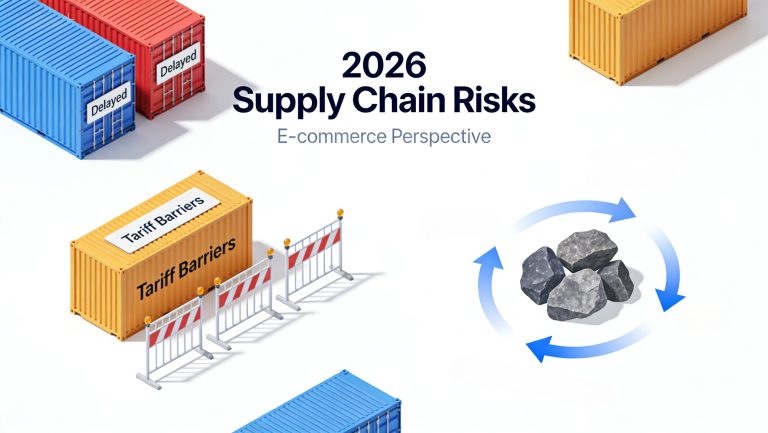
China remains an important sourcing market for buyers in North America, Europe, Australia and many other regions. The opportunity is real, but a low online quote is not enough to prove that a supplier is suitable for your order. In 2026, buyers also need to consider supplier identity, product evidence, payment controls, quality consistency, compliance, logistics and the effect of tariffs or freight changes on the final landed cost.
Most sourcing problems do not begin with one dramatic event. They begin with small gaps: a product description that is too general, a quote that leaves out packaging, a sample that is not tied to a written specification, a payment account that changes without explanation, or a shipment plan discussed only after production is complete. A practical China sourcing risk review helps make those gaps visible before they become expensive to correct.
What are the main China sourcing risks?
The risks vary by product and order, but most buyers should examine six connected areas:
- supplier identity and actual manufacturing capability;
- product specifications, materials and performance evidence;
- quote scope, payment terms and total landed cost;
- sample approval and consistency during mass production;
- documents, packaging, logistics and delivery responsibility;
- communication, compliance and the buyer’s ability to respond when conditions change.
These areas should be reviewed together. A supplier may communicate well but still be a poor fit for a technical product. A factory may offer a competitive price but lack the process control needed for repeat production. A shipping quote may look attractive while leaving the buyer unclear about customs, taxes or importer responsibilities. The purpose of a risk review is not to assume that every supplier is unsafe. It is to replace assumptions with evidence.
1. Verify the supplier before discussing payment
Start by confirming who you are dealing with. Ask for the supplier’s full legal or trading name, business address, main contact, bank beneficiary information and the name of the entity shown on the quotation or contract. These details should be reasonably consistent. If the beneficiary is a different company, ask why and document the explanation before sending money.
Also ask whether the supplier is the manufacturer, a trading company, or a combination of both. A trading company is not automatically a problem, particularly when it has useful product knowledge or access to several factories. The important question is whether its role is transparent and whether it can control the quality and delivery promised to you.
Capability evidence should match the product. A general showroom photograph is weak evidence for a customized machine, a food-contact product, an electrical item or a product with strict packaging requirements. More useful evidence may include recent production photographs, process information, sample records, equipment relevant to the specification, and clear answers to product-specific questions.
2. Turn the product idea into a controlled specification
Many disputes are really specification disputes. The buyer believes one standard was agreed, while the supplier understood another. Before comparing prices, prepare a product brief that states the intended use, dimensions, materials, colors, components, tolerance where relevant, packaging, labeling, target quantity and destination market. Include drawings, reference photographs or examples when words alone could be interpreted in different ways.
For technical or customized products, separate mandatory requirements from preferences. A mandatory requirement may be a voltage, material grade, load capacity, food-contact requirement or export document. A preference may be a color variation or a packaging style that can be changed if the cost is too high. This distinction helps suppliers quote accurately and helps the buyer make a rational trade-off.
Do not treat a product link or catalogue photograph as a complete specification. It is a starting point for discussion. The final order should refer to the agreed version of the specification, sample, drawing or approval record.
3. Compare quotes on the same scope
A price comparison is meaningful only when the suppliers are quoting the same scope. Check whether each quote includes the same materials, accessories, packaging, printing, testing, spare parts, tooling, inland transport and delivery term. Ask suppliers to identify exclusions instead of assuming that an omitted item is included.
Record the commercial details in one comparison sheet: unit price, minimum order quantity, tooling, sample cost, production lead time, payment schedule, quotation validity, packing method, Incoterm and estimated logistics assumptions. This makes it easier to see why one quote is lower. Sometimes the difference is a genuine production advantage. Sometimes the cheaper quote simply leaves more work or risk with the buyer.
Buyers should also consider landed cost. Depending on the destination, this may include the product price, export packing, domestic transport in China, consolidation, freight, insurance, customs brokerage, duties, taxes, port charges, last-mile delivery and possible storage. Tariffs, currency movements and freight changes can make the final cost different from the first supplier quote, so calculations should be treated as estimates until the relevant details are confirmed.
4. Use samples as evidence, not as a guarantee
A sample answers some questions, but it does not automatically prove that every production unit will be identical. Before approving a sample, record what is being approved: dimensions, materials, finish, function, accessories, labeling, packaging and any test result. If the sample is modified, keep the latest approved version clearly identified.
For repeat or larger orders, define how the approved sample will be used during production. Depending on the product, this may include first-piece approval, a production check, measurements against a drawing, functional testing, packaging review and a final inspection before shipment. The inspection plan should reflect the actual failure points of the product rather than relying on a generic checklist.
Photographs and videos can support communication, but they have limits. They may not show hidden defects, internal dimensions, batch consistency or performance under load. When the commercial risk is meaningful, independent or buyer-side inspection may be appropriate.
5. Control payment and change requests
Payment should follow evidence and agreed milestones. Buyers should be cautious when a supplier creates urgency without a clear commercial reason, requests payment to a new account at the last minute, or changes the beneficiary without documentation. Confirm important bank changes through a trusted channel and compare the account details with the signed quotation or contract.
Keep a written record of what each payment covers. A deposit may be linked to production, while the balance may depend on completion of agreed checks or documents. The exact arrangement should suit the product, supplier relationship and applicable contract terms. This article is general commercial guidance, not legal or financial advice; buyers should obtain professional advice for high-value or regulated transactions.
6. Plan quality evidence before shipment
Quality control is more useful when the buyer decides in advance what evidence is needed and when it must be collected. For a simple product, this may be a clear sample, a production photograph, quantity confirmation, carton measurements and a final visual check. For machinery or customized goods, the process may require a factory acceptance test, serial numbers, performance records, manuals, spare parts and a review of the packing condition.
Ask for evidence that can be matched to the order. Photographs should show the relevant product, not only a clean showroom. Test videos should identify the model or order where possible. Packing photographs should show labels, carton marks and protection appropriate to the shipment. Evidence is stronger when it is specific, dated and connected to the agreed specification.
7. Treat logistics and compliance as part of sourcing
Supplier selection and shipping planning should not be separated. Confirm carton count, dimensions, gross weight, pickup location, readiness date, labeling, commercial invoice information and any documents needed for the destination market. Clarify the selected Incoterm and understand which party is responsible for export clearance, freight, import clearance, duties, taxes and final delivery.
Products may also be subject to market-specific rules. Depending on the product and destination, buyers may need to consider labeling, electrical requirements, testing, safety documentation, material declarations, packaging rules or other compliance obligations. SDI can help organize questions and China-side information, but the importer remains responsible for meeting the laws and requirements of the destination market and should use qualified customs or compliance professionals where needed.
8. Build resilience instead of relying on one conversation
A resilient sourcing process has a response plan. For important products, consider whether there is a second qualified supplier, an alternative material, a realistic reorder point, and enough time to respond to production or shipping delays. This does not mean maintaining two suppliers for every item. It means understanding what would happen if the preferred supplier lost capacity, changed a key input, or could not ship on the expected date.
Buyers should also keep a complete sourcing file: current specification, quotation versions, approved sample details, inspection records, payment records, shipping documents and important communication. Good records make future orders easier to compare and make it simpler to identify where a problem started.
How SDI supports safer China sourcing
SDI Export Services helps overseas buyers manage practical China-side sourcing work. Depending on the project, support may include supplier search, communication, quote comparison, supplier information gathering, sample coordination, production follow-up, quality coordination, packing review and export support. The exact scope should be agreed according to the product, order value, destination and buyer’s priorities.
SDI can also support buyers who already found a supplier. You may provide the product description, supplier link, quotation, sample photographs, destination country and the main concern. The next step might be to clarify the specification, compare the scope of two quotes, organize supplier questions, review payment and logistics assumptions, or plan quality evidence before shipment.
The goal is not to promise that every risk can be removed. International trade always involves variables. The goal is to help the buyer see important uncertainties earlier, communicate requirements more clearly and make decisions with better information.
China sourcing risk checklist before paying a deposit
- Have I confirmed the supplier’s role and the payment beneficiary?
- Does the quotation cover the same product scope as the alternatives?
- Are the materials, dimensions, functions and packaging written clearly?
- What exactly does the approved sample represent?
- How will quality be checked during production and before shipment?
- Which documents, labels and shipping responsibilities are confirmed?
- Have I estimated landed cost rather than comparing unit prices only?
- What evidence would I need if the supplier changes an important detail?
Related SDI resources
For related guidance, read SDI’s China sourcing services, customer case studies, and articles about buying high-quality products at a controlled price and calculating landed cost. If you already have a supplier quote or product requirement, contact SDI with the information you have.
FAQ
Can SDI guarantee that every sourcing risk disappears?
No. Supplier behavior, product variables, logistics conditions, regulations and market changes cannot be eliminated completely. SDI helps buyers reduce avoidable uncertainty through clearer information, communication and practical controls.
Can SDI help after I have found a supplier?
Yes. Buyers often ask for help reviewing a supplier conversation, quote, sample, production update, payment request or shipment plan. The available support depends on the project and should be agreed before work begins.
Is a risk review useful for a small order?
It can be. A small order may still be important if it is a first test, a new product launch, a store setup or the beginning of repeat purchasing. The review should be proportionate to the order’s value and risk.
What should I send when asking for help?
Send the product name, quantity, destination country, supplier link, quotation, photographs, specification, packaging needs and the main concern. Incomplete information is acceptable; it can still show which questions should be answered next.